Showing posts with label best practices. Show all posts

Thursday, June 2, 2022

June 2022: Summer Suggestions


If you read my previous post, you know that I have a little more time in my schedule these days to read and reflect (at least theoretically!). So just two weeks later, I already have a bundle of recommendations for you. 

Since the pandemic began, my clients have needed a steady stream of resources related to stress management and the many ways that COVID and world events have turned our worlds upside down. Despite the ongoing stream of bad news that seems to bubble up every other day, I do have a list of links that pertain primarily to a favorite topic of mine: #leadershipdevelopment. Please let me know if you find any of these useful!

⏱ How to Help an Employee Who Struggles with Time Management. This is very good - a much more holistic approach that doesn’t reduce the problem to just finding a new #productivity app. I especially like the way it challenges the manager to recognize how much their own communication and delegation matters. 

⏳ Best Time-Saving Google Assistant Tricks. I have a significant number of clients who are neurodivergent, meaning that they are on the autism spectrum, ADHD, dyslexia or a few other neurological diagnoses. Sometimes, these folks struggle with staying on task or losing track of time. I have shared this link with several of them and they have told me it has been helpful. Note that these tricks are also useful if you are someone who often engages in deep work or really gets into flow, yet still needs to keep track of commitments at times. Last but not least, here's a useful link on time blindness, which is something often experienced by those with ADHD. Even if you do not struggle with this, you might manage someone who does and it could be a great opportunity to dialogue about how to work within the constraints created by that.

🤷🏽‍♀️ Best Practices for Hiring Gen Z. Given the roller coaster ride we are currently on, I cannot tell if we are still in the Great Resignation or a recession or what!? Nevertheless, talent managers and leaders are experiencing new challenges almost daily as they try to figure out how to recruit new hires, manage expectations around remote and hybrid work, and retain valuable employees. I thought this article did a good job describing what it's like to recruit and hire new graduates. We really do need to become students of who they are and what they want, because they bring some very new expectations to the workplace.

⁉️ Creative Questions. These could be used in a variety of contexts. For example, I am often asked by clients for help with coming up with creative questions to open meetings that are fun but also build trust and connection on teams, but they are useful in job interviews too. And honestly, they would be fun around the dinner table with friends too! 

🗣 Ask a Manager. Where has THIS been all my life? You can also follow them on Twitter. I also recommend "Ask a Boss." Obviously, I recommend proactive professional development for managers and leaders and not reactive "hair-on-fire" crisis management, but this could be a good site to bookmark as a reliable reference for problems in a pinch.

Final Thoughts. As I s-l-o-w-l-y recover from my broken ankle, I am doing as best I can to live day by day and cultivate patience. In recent reading, I came across this quote from Simone Weil, a 20th century French philosopher and mystic:
We do not obtain the most precious gifts by going in search of them but by waiting for them.

May we each do our best to patiently persist through the highs and lows of these days. Thanks for reading. Please reach out with questions or feedback at kelly.soifer@ksleadershipdevelop.me 

Thursday, March 3, 2022

March 2022: Are We There Yet?

 George Takei (Sulu from Star Trek) posted this on Twitter today:


These past two years have been the longest decade ever.


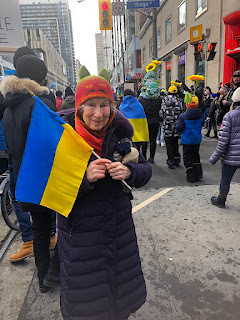
I could not agree more. Just when we thought Omicron was winding down and COVID-19 was moving from pandemic to endemic stage... we are here, with the first ground war in Europe since WW2. I include this photo simply because it made me smile in the midst of so much sad news. This is the author Margaret Atwood at a protest in Toronto. Between her cat beanie, the Ukraine flag and her impish smile, I was encouraged.

I share this month's links and recommendations with the hope that you will find them motivating, useful, and enlightening:

🌎 The Culture Map. I've recommended this book before... it is currently on sale for cheap on #Kindle (don't delay -- it probably won't last long). I have a small number of tools I use with clients to assist with #leadershipdevelopment and #managementconsulting. This one is in the top three for me. I recommend it HIGHLY.

⏳ We Need Time to Rehabilitate from the Trauma of the PandemicAnecdotally, my conversations with several clients verify the recommendations in this article as they start returning to the office, or even just meet together for a 2-3 day meet-up to reconnect. We need to ease back in carefully and intentionally. Also, this one: 6 red flags your body is breaking down from overwork. It is crucial to be mindful of how we are doing. Take a peek at the six red flags and see if any of them apply to you. Why not?

🗣 Interview questions you should be asking if the job is remoteGood questions for both interviewers and interviewees. I have sent this to some clients who are in the job hunt and think they want to find a remote position; I encourage them to really think through their responses. All of the questions are spot on, but questions 6, 7, and 8 are especially insightful. If you are having to shift your team to remote status for the foreseeable future, I recommend using all these questions to set up clear expectations for your collaboration moving forward.

😱 At what age does mental speed slow? OK, maybe I noticed this one because I turned 61 last month... according to this article, it doesn't look so good for my team! 😳 However, I got this one from a client and thankfully it is a bit more optimistic: When Working Harder Doesn’t Work, Time to Reinvent Your Career. This one is a thoughtful spin on the midlife crisis. Make sure to read it.

❤️‍🩹 It's Your Friends Who Break Your Heart. This is a long read, but a worthy subject. So many good insights that were so helpful to read. It gave me hope that I'm not crazy when I think about some of my failed friendships. It also explains why our relationships have suffered during the pandemic.

🙈 And now for something utterly random... From Gretchen Rubin: "One group of product researchers argue that, when it comes to texture preferences, people fall into four groups: chewers, crunchers, suckers, and smooshers. Check out table 4 to find out your texture preference. Apparently, I’m a “smoosher.” I love that word, and I love soft, spreading food textures—Greek yogurt is one of my favorite foods." Personally, I am also a smoosher. Chocolate pudding and cool whip are favorites of mine. Use this article at your next team meeting for a unique (and hilarious?) icebreaker.

❝ ❞Final thoughts. I read this recently from Ryan Holiday:

Don’t work for the external rewards. Because they will not come. Or worse, what does come will not be a reward at all. Instead, do your work because it’s right. Because it’s who you are. Because the alternative is even more unthinkable.

Thanks for reading. Please feel free to forward this to friends and colleagues. Send ideas, questions and feedback to me at kelly.soifer@ksleadershipdevelop.me. 

Friday, October 1, 2021

Oct 2021: Hiring, Quitting, and Retention


I am having many conversations with clients across the board as to how many employees they are losing, and how many openings they have. I see it in the headlines and I also see it in real life. We are still figuring out how and why this is happening, but the reasons in this article resonate with many of the conversations I am having with both sides of the equation: employers and employees

So rather than post my best resources for the month, I'm sticking with one very good article, and deconstructing it based on the many, many conversations I am having in the past few months. The article is titled, "I spoke to 5,000 people and these are the real reasons they’re quitting," from Fast Company magazine.

Before I begin with my own conclusions: to give you an idea of my sample size, I average 4-6 client calls and presentations each day, Monday through Friday, and speak with about 60 individuals regularly (at least once a month). In September I met with people located in Pasadena, Boise, San Jose, Bangkok, Sarajevo, Chicago, DC suburbs, Santa Barbara, Austin, Glasgow, Wichita, Boston, Detroit, Portland, San Antonio, plus group calls with people distributed throughout Europe, Asia and Africa. SO fascinating!

The Fast Company article starts with this:

There have been reams of information written about employee motivation and performance over the last 100 years. But we’ve found there are nine key factors that impact these metrics—and they are much more important than pay and benefits. I call these nine factors the Currencies of Choice. 

Below I quote each of the nine currencies ("FC"), followed by my reflections ("KSLD"):

☮️ FC: 1. People want to work for a company whose values align with their own. This means a company that has a compelling purpose and values that resonate with the employee’s closely held beliefs. 

KSLD: This is, in part, a generational thing. Younger generations have been asking for the ESG rating of the companies they work for, and look for employers who have it. Do you have an ESG task force in place? Do you even know what "ESG" is? (Here is a great definition). How are you communicating the processes, projects, metrics and values around those standards? Good quote: Today’s workforce not only wants but often demands a role in shaping the organization’s purpose... Social capital has become just as important as human, financial, and physical capital. (Steve Graves). 

My advice: To hang on to newer college graduates, and to engage employees on a deeper level, I strongly suggest you pay attention to ESG.

🤛🏾 FC: 2. People want to work for someone they trust and respect. That person is you, their direct manager. No pressure! The Gallup organization’s research shows that managers can impact employee engagement by up to 70%.

KSLD: In other words, the majority of people do not quit their job per se; they quit their manager (ouch!). Much of my work in the past year have revolved around management training, because in fact, most companies do not have dedicated, comprehensive management training! Ask the managers you know what sort of training they received to be managers. I can bet that most of them will shrug and say they were basically thrown into the deep end of the pool and had to learn through trial and error. I counsel ALL executives to get serious NOW about developing up-to-the-minute, relevant, competency-based management training. Let me know if I can help!

👯‍♀️ FC: 3. People want to work with people they like. That’s hardly surprising since humans are tribal beings at heart. Even the most introverted among us want to belong to a group of people we like working with—especially since we spend such a significant amount of time interacting with our coworkers.

KSLD: I frequently rely on the "Q12" questions employed by Gallup that are designed to optimize employee engagement. They are asked to rate these on a Likert scale. Everyone cringes at statement #10: "I have a best friend at work." I suppose it feels sort of lame and junior high to ask that question, but Gallup says it well: "Human beings are social animals, and work is a social institution. Long-term relationships are often formed at work -- networking relationships, friendships, even marriages." I am finding that younger employees truly count on making friends at work. How does your workplace facilitate that?


🏆 
FC: 4. People want to be appreciated in a way that’s appropriate to them. Some studies show that praise and appreciation are the top engagement factors among employees. Appreciation doesn’t have to include a grand gesture. A simple “job well done” or “thank you” can be enough. But it must be authentic, and it must be meaningful to them.

KSLD: "shout-outs" on Slack or Teams threads are all well and good, as well as "Employee of the Month" awards. But my strongest advice to managers is to ask people individually how they prefer to be appreciated. There are many options: gift cards, awards in front of peers, PTO hours, points toward pay increases, etc. Some people like attention and praise, many do not. It's important to pay attention to how people are best motivated.

📣 FC: 5. People want to have a voice. They want to be listened to and heard. They want to know that if they tell you something that’s not working, that it will be fixed—or that you’ll give them a good reason why it can’t be. They also want to be able to share ideas about how to make things better.

KSLD: Not to over-generalize, but this currency may be somewhat generational (like #1). Younger generations are more used to immediate feedback and dialogue. Remember, they are digital natives who have known nothing else other than the immediacy of the internet, social media comments, and text messaging. They do not want to work within the constraints of annual reviews or generic town hall meetings. They prefer minimally hierarchical systems and input into decision-making.

📊 FC: 6. They want to know what they need to do to succeed and how that success will be measured. Greg McKeown’s book Essentialism makes a strong case that having clarity around roles and goals helps teams perform better; it encourages better behavior. 

📊 FC: 7. People want to learn, grow, and develop in their careers. Not everyone wants to climb the corporate ladder, but they do want to develop and grow in some way through training, additional responsibilities, special projects, or simply having variety in their role.

KSLD: I'm combining these two because I feel like they revolve around the same theme. What is crucial is that each organization needs to have a robust "talent lifecycle." Significantly, recent college graduates have lived through not one, but two cataclysmic economic crises. In light of the Great Recession of 2008-2009 and the current pandemic, employees' highest priorities are advancement opportunities and economic stability. These six stages need to be addressed in most companies.

📶 FC: 8. People want to be inspired to go the extra mile. People come to work to add value—we need to let them. Daniel Pink’s book Drive: The Surprising Truth About What Motivates Us makes a compelling case that people will go the extra mile if they have autonomy, mastery, and a sense of purpose in their role (refer to the first Currency of Choice).

KSLD: This is BIG. As FC mentions, this is tied in to the first currency related to alignment of values. In this time of so many unknowns, it really helps if we are given a sense of purpose and the big picture for WHY we are doing what we are doing.

❤️ FC: 9. People want to spend most of their day doing work they love. They want to spend time doing things they’re not only good at but also enjoy doing. 

KSLD: this captures the bulk of what I work on with clients... helping to build a strengths-based culture, where people are set up to succeed and freed up to be self-motivated to do quality work.


In summary, here are my suggestions for beating
the Great Resignation of the COVID-19 Pandemic:

1. ESG!
2. Commit to solid management training
3. Pay attention to trust-building and culture creation
4. Provide genuine affirmation and appreciation
5. Cultivate consistent dialogue and feedback loops
6. Deepen your talent lifecycle
7. (Ditto!)
8. Cast a compelling vision
9. Establish a strengths-based performance approach

✪ BONUS content: I have mentioned that some of these dynamics are generational. I thought this article did a good job succinctly describing them: This is how each generation is feeling about returning to the office.

Let me know if you need ideas or more resources. Reach out to me at kelly.soifer@ksleadershipdevelop.me. Thanks for reading.


Tuesday, June 15, 2021

WAIT List, June 2021: Project Management


I have been committed to providing content for clients on this site monthly, and the feedback I'm receiving is positive. With that in mind, I want to try adding another component to this site: a monthly coaching conversation related to "What Am I Talking about with clients." In other words, a "WAIT" list. [Too corny? Let me know. Seriously] So here goes -- a topic that has come up multiple times in the last few weeks, so perhaps it's coming up for you as well?

Certainly, most (if not all) of us are currently navigating the unknown waters of post-pandemic return. We had some workable routines that emerged during these many months, and it is honestly a little jarring to have to adjust again. Offices are trying to figure out hybrid schedules, some people are timidly re-entering commutes (some for the first time, since they took the position during the pandemic), others are feeling the challenges of back-to-the-office requirements just as school is ending. YIKES.

More than ever, we need help with our calendars as we juggle multiple priorities. As one client told me bluntly today, "we need training on prioritization and time management." This is certainly a longer conversation, and each of us has our own unique circumstances, but I want to share three key elements that I use, and have shared, with many people.

  1. 🏔 THE SUMMIT. This HAS to be your starting point. For the first time you do this, you may need to set aside three hours to really dig in -- but trust me, It. Is. Worth. It. I call this step the "summit" because I am asking you to climb a proverbial hill and get the 30,000' perspective on your life. 

    The best place to start is to select your main five priorities in your life.
    That might be family, health, faith, work, hobbies. Or it could be friends, exercise, community service, career, cooking. You get the picture. Slow down and take the time to really drill down and decide the 5 areas you want and need to spend most of your time on. PS Notice how work or career is only ONE of the five.

    Then I strongly recommend that you start a mind map. Please try doing this digitally, since digital mind maps are easier to edit and refine, and go with you everywhere.  My two favorite sites are mind42.com (free!) and MindMeister ($50-$100/year, but more bells and whistles - ask about the academic discount). Put yourself in the first, main bubble. Then create 5 separate branch bubbles off of your central bubble for your main five priorities. Once that is done, go to town! Start downloading all the hamster wheels spinning in around in your head, creating further bubbles on the mind map. Nothing is too small! Put it ALL there. PRO TIP: sync your computer with your big screen TV or if you have it, a video projector, and cast the whole crazy mess onto a large space so you can see everything. You truly need to get the big picture.


  2. 📋 PROJECTS. Once you lay everything out on the mind map, start identifying the projects you are responsible for, especially when it comes to work, but for everything else too. For me, I start with each of my clients. Then I break down the various projects I have going with each client. Then I also note the projects in my personal life: my meal plans for the week, home projects, travel, exercise, books I want to read, etc.

    Then this is a crucial step: identify a project management software (PMS) to use. Personally, I use Trello. But there are a BUNCH out there: Asana, Basecamp, MS Projects and Planner, etc. Here's the deal: most of my clients get stuck here. They focus too much on TASKS, and not where they should be, on PROJECTS. We tend to get lost in the weeds when we focus on individual tasks, rather than clustering and organizing tasks together into projects. (The latter step is especially crucial when you're collaborating with others.) If you don't pick up what I'm laying down, read this brief article: it's an ad for ClickUp, another PMS option, but it does a good job 'splaining things.

    I have collected a bunch of resources on how to set up Trello here: I like it because it is visually stimulating (thus keeping my attention better than lots of bullet lists), and it has a GREAT phone app. 

    Take the time to load up your projects onto the project management software, delineating all the tasks you can think of. If you're really feeling it, try to put due dates on those tasks.


  3. ✍🏾 SCHEDULING. NOW is the fun part. Every Sunday afternoon or evening, I take 60-90 minutes and map out my week. I basically hike part way up the Summit and see where things are. I look over my mind map to note any changes or make updates, then I review my projects to figure out what I am doing for that week, and then I put those responsibilities in my calendar. If I am giving a presentation (usually already on my calendar), I set aside two hours to create it. If I am part of book club, I schedule an hour to read the darn book. If I have a review scheduled with someone, I set aside an hour on my calendar to prepare for it. Get the picture?
There you have it. It's a bit of a heavy lift on the front end, but creates a structure that is relatively easy to maintain. I could and perhaps should add a 4th element: I review my work at the end of each day, making sure I completed all the tasks I scheduled myself to do. If not, I find a new place for them on my calendar!

Hope this got your wheels turning and perhaps even motivated to try it. Contact me at kelly.soifer@ksleadershipdevelop.me with your questions, or to set up an appointment to get some assistance. Cheers! 🥂

Monday, May 31, 2021

June 2021: Time to Reset?


I don't even know where to begin. We are in the midst of such strange, disorienting times -- that somehow still feel better than this time did in 2020. I spent some time looking over my journal from a year ago during this Memorial Day Weekend, and was painfully reminded of George Floyd's murder, the protests and controversies that boiled over as a result, the profound fear and conflict bubbling out of COVID, and the... trauma of the presidential election. Wow.

I'm thankful to be vaccinated, and truly grateful for the work I get to do, that has remained surprisingly steady throughout such an unsteady time. Yet I am also aware of so many unknowns hovering over us: will the level of vaccinations in our country effectively stem the tide of infections that we witnessed in this last year? will schools get to open so that parents can truly go back to work? will the vaccines prevent the spread of the variants? will the businesses who have suffered this past year get to recover? will employment levels return to where they were pre-pandemic? how will children do long-term after such an isolating year? [heck, ALL of us?!] do I want to return to the office? These are just some of the questions I hear from clients, friends, podcasts, you name it.

I certainly cannot answer any of these questions, but I want to pass along a few resources and recommendations that I believe can help to sit with these questions and quandaries. Thanks for reading.

🗣 8 pandemic-related interview questions you should be ready to answer. While this article is designed to prepare a job-seeker for the new frontier of job interviews post-pandemic, I would almost recommend them as journal prompts for your own reflection! My favorite was #6: What do you do differently now? Just to answer that question personally: I find that multiple 1:1 video calls each day, while personally fulfilling in that I love connecting with clients in a productive and genuine way, are cumulatively taxing. I have had to "up my self-care game" in getting more rest, and committing daily to practices at the start of my day that center me

🤷🏽‍♀️ 10 Questions for a Successful Summer. Speaking of journal prompts, this one got my mind spinning in a lot of [productive] directions this past weekend, and I'm still sitting on a couple of them.  While this podcast is very... how do I put it... "female forward" (?) in its presentation, I think the questions apply to anyone, and invited me to really think creatively about what I want to do this summer. The first question is worth your attention: What defines success for you this summer?

🖥 Digital Tips. I spend an unexpected amount of time with clients assisting them in figuring out issues around productivity: how do I get a handle on emails? how do I remain focused when I'm getting constantly pulled away by hair-on-fire situations? how do I keep track of and manage so many projects? how do I effectively supervise others when I also have so much of my own work to do? While all of that is much longer conversation, here are two recommendations that I used this past month:

  • 32 incredibly useful things you didn’t know Google Sheets could do. Perhaps I'm just a sucker for hacks. But this has some goodies! Current favorite: freezing rows. So helpful.
  • The Case For Inbox InfinityI like this one. Granted, I'm a major naysayer of Inbox Zero, so perhaps I like this because of its confirmation bias. But give it a go and see what you think. My favorite line: "For now, we’re stuck with email. You have to use it. But it does not have to use you." Music to my ears.
🧗🏽‍♂️ Life's Work: An Interview with Alex HonnoldIf you saw the film "Free Solo," you will know why I like this article. Rather than read leadership books, I tend to like to read interviews, memoirs, and biographies about the lives of intriguing people to glean leadership insights. This one has some good tidbits about preparation, stewardship, how to remain focused, and how to keep motivated.

😵‍💫 How To Leverage The 7 Types Of Rest To Be Your Happiest, Most Productive Self. I've saved the best for last. This is an EXCELLENT article. Please, please read it. Then forward it to your people. Then print it out and read it in a park with a pen in your hand, or at least away from your desk. It is a REALLY good way to think about rest and self-care. As we move ahead in this post-pandemic landscape, we have to take our self-care to another level. This article provides a good inventory for assessing yourself and what you need. I showed it to a client who is a social worker and he read it, paused, then looked at me and said, This is a really good article. This backs up the latest research. But it is also engaging and readable. 

❝ ❞ Favorite quote these days. This was shared to me by a client. Thanks Deborah! 

“Yesterday is history, tomorrow is a mystery, today is a gift.”


Thanks again for reading this. Please feel free to pass it along to others. And  please note the resource list I've posted directly to the right of this post for free and handy resources that will make your work life that much easier. And you can email me with questions, feedback or a request to meet for a free half-hour of coaching to assess what you need at kelly.soifer@ksleadershipdevelop.me. Ciao for now.

Monday, September 7, 2020

Sept 2020: Happy Other New Year?

Blogger and author Gretchen Rubin says, “September is the other January — a clean slate, a fresh start, a chance to use new pencils, fresh notebooks, and begin again.” Additionally, September is the month of the Jewish New Year, Rosh Hashanah. This year it begins on September 18. If there was ever a time for a do-over, a fresh start, it would be NOW, amiright? 

All that to say, PHEW, this year has been a humdinger and we're only 3/4 of the way there. To prepare for the "new year" (and to get a little R&R), I just returned from a lovely week in Yosemite. Fortunately, the national parks are doling out passes very gingerly, so the park was incredibly UNcrowded and there was good mask-wearing in all group areas.

I took this photo on a walk one evening after dinner as a reminder of what's ahead... a long journey that feels a bit lonely at times. But still has beauty all around if we look for it.


While I certainly spent much of the time resting, being outdoors and reading things for fun, I also used the week to step back and reflect on what has happened since the pandemic. I would say that the majority of my work currently centers around assisting leaders and employees in managing the stresses, strains, and unknowns as we continue to work remotely, for the most part. And for better or worse, I have worked with a broad spectrum of contexts: higher ed, retail, non-profit, technology, churches, and start-ups. So while I can't sound all fancy and tell you I've been doing some really high-level research on this topic, I can give you my ground-level impressions gained from day-to-day work with many people.

So for this month's blog post, rather than give a list of valuable resources that I've used with clients in the last month, I'm going to share some of my TEN BIG AHA’s about working from home (WFH). This also makes this post a bit longer than normal ~ let me know what you think! Much of my thoughts are framed by a 7-article series from Harvard Business Review called The Big Idea for July 2020. I would give you the links, but you can only access them through subscription. 

Here goes!

The pandemic didn’t “cause” any of our problems; it just accelerated them. All of the things we are currently struggling through in terms of the workplace and the economy overall were already present before the pandemic. The shopping mall was already waning; retail brick-and-mortar were already deeply threatened by online shopping; we already had an abundance of over-priced restaurants; multiple employers were grappling with the question of whether they should allow employees to work from home or some sort of hybrid situation; our addiction to air travel was contributing greatly to climate change; higher ed is ridiculously expensive and the resulting loan debt is unmanageable  — not to mention that the current structures and degrees in higher ed are somewhat out of date in terms of the skills needed in the marketplace…. So many other things could be listed. Suffice it to say, all of our current challenges just came faster than we expected, and now we are being forced to deal with them rather than keep being in denial.

The 21st century workplace has been in deep transition and transformation for years. The pandemic has accelerated the evolution away from the office as a productivity space to something else — a learning space and a space to solve complex problems. We already saw this during the 2008 recession as coworking spaces and the gig economy took hold. Some ridiculous percentage of workers in the US are independent contractors (I can't find reliable data -- 20% to 40%?), and aren’t connected to one particular office. The pandemic will only decouple the worker from the office even further. Not to mention that the concentration of certain industries to certain cities has made the cost of living completely unamanageable (hello Silicon Valley and SF, among others!), so it was inevitable that the 21st century workplace would go under profound transformation. Companies are currently building the plane as they fly it, as the saying goes, in this regard.

This doesn’t mean offices are irrelevant. They can be crucial for a start-up, where the key players need to work together in nimble and catalytic fashion, solving problems and making strategic decisions together. This is also needed around big machine learning projects (like I even know what that means! Just trusting techy bros on this ones...) involving big data, AI, etc. 

We will not know the impact of all this on the physical workplace for 12 to 18 months. Not only is this due to the fluid nature of the pandemic and the economy, but also because companies are usually locked in leases that won’t be renewing for 12 to 18 months.  STAY TUNED.

HOWEVER, people are realizing that they miss things about their workspace that have little to do with production. They really need the office for socialization. People need to convene in person at least once a year. PS The lack of socialization is truly isolating for some; and for others, they are profoundly struggling with anxiety and stress related to non-work issues that are emerging from this year's MANY struggles. I have worked with several clients to create "safe spaces" to talk about these things.  It has proven very fruitful.

There are many things people like about working from home.
  • No more irrelevant travel
  • More focused time -- fewer pop-in interruptions, less random conversations.
  • Shorter meetings
  • More flexible time with family
  • No commute!
  • It took awhile, but many are finally in the groove of WFH
            ❼  Why is this working better now? Remote work has been seen as less valuable in the past and employers have resisted it. But now...
            • Everyone has to do it;
            • Thus we had to collectively figure out challenges.
            • Before, remote work was compared to the office, where we’d never have kids or pets in the picture! So it seemed less professional and legitimate?
            • In the past, virtual workers felt "lesser than" and left out - no longer!
                Leaders have a big job moving forward. They must be more invested in clear communication. One almost has to become the Chief Repetition Officer because collective vision, values and culture will not exist in one place or be naturally absorbed.

                Managers are bearing the brunt of the shift to remote work. Occupied by supporting employees, managing dispersed teams, nurturing connections. Increased frequency of 1:1’s. Less team collaboration time needed as a result, so meetings can be shorter. Managers also should know the habits and styles of their team; figure out best focus time, best meeting times. Also important to establish expectations in terms of turnaround for email, messaging. (This could be an entirely separate post - contact me if you have questions...)

                LAST BUT NOT LEAST... Our job moving forward will be to be committed long-term to keeping our work human. There will be a temptation to move even more work to digital platforms and keep tasks and project management front and center rather than keep working on trust-building and maintaining relational bonds. 


                All that to say, workplace stress looks really different now. Again, feel free to contact me with questions and feedback. I really have talked to so many different about their situations and would love to assist you! (Or just listen and commiserate 😅) Email me at kelly.soifer@ksleadershipdevelop.me. 

                FINAL ENCOURAGEMENT.
                I've been reading some poetry at night to end the day on a calmer, more thoughtful note. Simple words from Mary Oliver:

                Instructions for living a life. 
                Pay attention. 
                Be astonished. 
                Tell about it. 


                Thanks for reading!
                 

                Sunday, June 7, 2020

                June 2020: Journey and Justice Edition

                My goal is to hit "send" on my monthly blog posts by the 1st day of month. Nevertheless, my typical blog content seemed rather unimportant this past June 1, in light of the incredible turmoil our country was (and still is) experiencing. While this springtime journey through COVID-19 and quarantine has already been historic and life-altering, the new addition of George Floyd's murder and the resulting events have my heart and head still spinning.

                Thus my content for this month will include the resources that are coming up most frequently in my conversations with clients, colleagues and friends. No doubt you are seeing everyone's recommendations scrolling through your feed... I hope my suggestions are enriching and lend even a small nugget of inspiration or insight.

                Management Tools. As we start dipping our toes back into "opening up" or "returning from lockdown" or "Phase 2" or whatever confusing stage you find yourself in, there are far more questions than answers, especially for those teams who have unclear direction regarding best practices for the office. While some parts of the country are giving permission to some groups to return, many have significant hesitations: Do we want to spend the money required to maintain the new standards? What will our employees with children do, given that the majority of typical summer options are still unavailable? What if infection numbers spike again because states opened up prematurely and there was a lack of social distancing during the protests? Here are some resources that have been helpful in those discussions:
                  • Architecturally Speaking: Get Ready for the End of Open Office Plans. The subtitle to this article, which actually appeared in my local paper, might say it all: "How Companies Need to Change Their Office Design in the Face of COVID, Effective Immediately." Though it may feel daunting to even consider how to return, this article provides a good place to start.
                  • Onboarding a New Leader — Remotely. Despite remarkably bleak employment numbers nationally, I have had more than one client need to hire for some significant roles in their organization. Unfortunately, I've heard the phrase "I feel like I've been thrown into the deep end of the pool" too often. This article reminds you of the key elements to include when bringing someone on in the midst of such chaos.
                  • These 9 interview questions will set dedicated remote workers apart. More than one of my clients are genuinely considering how they might offer remote working options moving forward. I applaud this consideration; HOWEVER, I also strongly suggest that employers sharpen their pencils on what to look for if hiring for remote positions. Similar to online vs classroom education options, not everyone is a perfect fit for either one. One client I have is entirely comprised of a distributed, remote workforce, with employees around the world. Even they found these interview questions helpful. Take a look.
                  • GREAT QUESTIONS FOR EVERY LEADER DURING COVID-19. I sat through a webinar that was frankly tedious and way too upbeat at most points (thus I'm not recommending it!), but smack in the middle of it was a 10-minute snippet from one gentleman that really got me thinking. He encouraged every leader to ask themselves these three questions:
                  ⇨ Do you see this time as a disruption or an interruption? Interruption would cause us to seek to go back to "normal." But how do you need to adjust and move forward?⇨ What is driving your decision-making? Fatigue? Fear? Strategy?⇨ How well-positioned are you for further pivots? Agility and ability are important.
                    Mental Health and Self-Care. While much of my work has included conversations around emotional intelligence, well-being and self-care, current circumstances have kicked up the temperatures of these conversations considerably. Not a week goes by now without at least one person in tears as they describe the confusion, disorientation and frustration we are all experiencing. While my goal is to assist people in developing resilience, I absolutely must start with listening and support. Here are some resources that put words to much of what we are going through:
                    • If You Feel Like You’re Regressing, You’re Not Alone. More than anything, this article made me say "YES!" out loud when I first read it. Here's a great teaser: "I see this war room fatigue in the leaders right now — and in their teams. It’s real and it is infectious, and it hits you like a hammer from one day to the next." Please set aside just a few minutes to read this one. It provides a very useful roadmap for leaders who might be feeling stuck (paralyzed?) and need some direction.
                    • Leading Through Grief in Life and Work. This podcast was moving, yet also quite helpful. It is an interview of a well-known restauranteur who endured the death of her sister and the loss of her restaurant in 2016. Poignant and wise.
                    No Justice, No Peace. I have been on the learning journey of peacemaking, community-building and reconciliation for my entire career. That being said, I am still learning. Some might be newer to this pilgrimage and wonder where to start learning. There are too many resources to list here, but these are good places to start:
                    • Just Mercy by Bryan Stevenson. Remarkable book by a remarkable man. Read this book, then see the movie that came out in January. Then make a donation to eji.org.
                    • Strength to Love. These are a collection of sermons by Martin Luther King, Jr, compiled by his wife Coretta Scott King. I have used these sermons with students and interns, and they simply cannot believe these were written over 50 years ago, given their remarkable poignancy for our times (how sad is THAT?). Read them out loud if you can. 
                    • How to Be an Antiracist by Ibram X. Kendi. This book quickly sold out on Amazon in light of George Floyd, though it's still available on Kindle. Make sure you pay close attention as you read, because Kendi is going to make you work as he breaks down your preconceptions in order to hear a new and powerful perspective. While I did not agree with every word written, I absolutely loved the challenge of reading this book and engaging his ideas. Brene Brown also recently interviewed the author here.
                    • Movies. SO MANY. Prioritize those made by black creators and artists: Selma, 13th, Harriet, When They See Us, Black KKKlansman, Get Out, Us. Where I am learning the most is realizing how much I need to make sure I am listening to the voices of other backgrounds, ethnicities, and perspectives, and not just those who speak from my own white and privileged experience.
                    • Make a plan. What is the next book, podcast or conversation in your queue? I've got With Head and Heart: The Autobiography of Howard ThurmanTHEN plan on remaining on this learning journey the rest of your life. Make it a habit to read and access resources from voices different from your own ~ Read a book once a month. Listen to podcasts intended for diverse audiences. Learn how to engage in conversations around equity, diversity and inclusion. 


                    Thanks for reading. Feel free to send me questions or feedback at kelly.soifer@ksleadershipdevelop.me. And explore my leadership development resources at KSLD Resources. Be well!

                    Sunday, December 8, 2019

                    My Christmas Gifts to You: December 2019


                    James Taylor's Christmas album is playing in the background as I write this... though I will admit I'm also wearing shorts and the sun is out here in Santa Barbara. I find it a little surprising that 2019 is coming to a close and that we are about to step into 2020, which sounds meaningful somehow.

                    Looking back, this has been a full year of literal travel (Chicago, Boise, Orlando, Dallas, San Diego, Malibu, Pasadena, Azusa, San Jose for work; Yosemite, Seattle, Maine and Alabama for fun) and a great deal of virtual travel with clients as well, to Washington DC, Seattle, Boise, Chicago, Sarajevo, Manila and Bangkok. I frequently tell people that I never could've imagined I would be doing what I am doing right now, and I am so grateful for the opportunities that have opened up to me.

                    In writing my last post on this blog for 2019, I thought it would be helpful to highlight some of the resources I always have available on my Google Drive, KSLD resources. Feel free to shop around there to your heart's content. Below I will list some of the goodies I have used the most with clients this year.

                    7 Steps To Creating The Best Personal Task Management System With Trello. I would venture to say that the top two questions that clients have the most for me relate to either conflict resolution or project management. Especially for someone relatively new to project management, I recommend they start with the Trello tool. This article is a great intro that walks you through it step-by-step.

                    The Future of Leadership Development: A Global Mindset. Thanks to technology and globalization, many companies find it almost common place to work on a daily basis with employees who are distributed around the world. Two of my clients have me doing leadership development work with their staff in Thailand, Bosnia, Philippines and Peru. This article is a good baseline to start from. Another super valuable tool is the book titled The Culture Map by Erin Meyer. I cannot recommend it enough and use it regularly with these clients and others.

                    Share your Signature Themes Report with Someone Close to You. Ten years ago I started using Strengths Finders with churches and with student interns and it ended up opening the door to so much more of the work I do now. I gave multiple presentations in the last two weeks to a variety of clients, from higher education to accounting to manufacturing, and never fail to be surprised by what sort of conversations it is able to spark, regardless of context. This particular document is especially helpful in getting someone to go deeper into the results of the Strengths Finder assessment, especially if they've got some doubts about their report. This document creates some wonderful conversation.

                    What Self-Awareness Really Is (and How to Cultivate It). If I only have five seconds to explain to someone what I am doing right now, I simply tell them that I help companies cultivate soft skills with their employees. This article does a good job explaining why that is necessary. I never could've imagined that 35 years of working with people in my past roles would have led me to this point, but it has been so valuable to be so comfortable in meeting people where they are and helping them figure out what they need to move forward both personally and professionally.

                    Healthy vs Unhealthy Boundaries. I talk a great deal with people about what it takes to maintain healthy work/life balance, but more and more I am finding that for many people, work IS life. And the struggles they have in their home lives are the same ones they are experiencing at work. Frequently the issue of healthy boundaries comes up and this is a great resource. In addition, I recommend this one on healthy/unhealthy relationships.

                    14 questions to ask an underperforming employee during a one-on-one meeting. Last week I participated in a great training session with academic leaders who are trying to figure out how to best manage their teams. One of the most difficult aspects of leadership is addressing problems with performance in a way that is not discouraging, but is also clear and effective. I think this is a surprisingly useful article.

                    An extra: I recommend this for MUST-SEE TV. Last week I was utterly gripped by this documentary titled College Behind Bars, produced by Ken Burns and one of his favorite colleagues, Lynn Novick. Set aside four hours this month to watch this. It is a remarkable story of restoration and redemption, with tons of challenges and heartache along the way. I could not stop watching this.

                    Final thoughts... as you gather around tables with friends and family this month, I was moved by the challenge to ask this question:
                    At family dinner, don't just ask kids how the test went and whether their team won. Ask them who they helped—and who helped them. (Adam Grant)
                    Thanks for reading... feel free to pass this along to someone else, and please do contact me with feedback and questions at kelly.soifer@ksleadershipdevelop.me. See you in 2020!

                    Sunday, August 4, 2019

                    Approved for August 2019: Writing, Refugees, Resumes & Retreats

                    I am sort of enjoying and dreading August at the same time. I have a vacation planned in Maine for the end of the month (cannot wait!) but August also signals end of summer and I feel like I barely started enjoying it (boohoo!) Nevertheless, the great resources for leadership development keep coming my way and I want to share them with you.

                    These 5 free apps make it easy to improve your writing. I finished teaching a class in June at Westmont College and was reminded once again that the many people do not know how to write coherent sentences!  (Yes, I'm a snobby former-and-eternal English major.) Being a good writer is a commitment, and there are some great resources available in this link. Should you want even MORE resources, I highly recommend my friend Nancy's blog.

                    Want to understand the current migration crisis, economic trade concerns, and recent Central American history? Given how divisive and complex these issues are, I often want to run and hide. But these two podcasts fed my brain big-time. So I recommend:

                    • Dr. Margaret Peters on Trading Barriers. This woman is a scholar at UCLA, trained at Stanford, and previously taught at Yale. I found this interview riveting and enlightening.
                    • The Controversial History of United Fruit. This comes from Harvard Business Review and  helps to explain the massive instability now existing in Central America, giving some of the reasons for the current migrant crisis south of our border. It is crucial that we understand and educate others about the context around these huge and difficult issues.

                    Our 5 Favorite Google Docs Resume Templates (and How to Make Them Work for You). And now from the sublime (migration crisis) to the mundane... I am frequently asked by clients for assistance in transitioning careers or positions. Yet rules for job-searching have really changed in the last 10 years due to the ever-expanding power of technology, the changes in the economy that have emerged since the financial downturn of 2009, and the shifting values of Millennials. I liked this article because it provides templates for some really good-looking resumes. Take a look; at minimum, you should keep your resume up-to-date and these templates might give a tremendous facelift to yours.

                    6 Tips for Running Offsites That Aren’t a Waste of TimeI am helping to guide at least two retreats at the end of this summer and in early fall with different clients and this article was a good brief checklist of reminders in terms of planning an effective offsite for your staff. I would suggest it highly.

                    Tried-and-True Recipes. In my last post I committed to sharing one of my favorite recipes each month. This month's candidate is SWISS CHARD AND KALE POTATO FRITTATA. I have chard and kale growing in my little condo side yard and this is a great recipe for them. The photo in the link is rather ho-hum but trust me it's a keeper and very adaptable to whatever vegetables you have on hand. Enjoy.


                    R A P I D F I R E!
                    Here are some current faves that I will share in quick succession with minimal explanation. Nevertheless... LOVE THEM!

                    Food for Thought.
                    A client stated this recently. We all know the Golden Rule, but do you know the Platinum Rule? 
                    Treat others as they want to be treated.

                    Thanks for reading...  please feel free to share with others and send me feedback at kelly.soifer@ksleadershipdevelop.me. Happy, happy August ~ get out there and have some adventures!

                    Sunday, June 30, 2019

                    Efficiency, Eating, Epitaphs, Education, plus an Extra: July 2019

                    2019 is halfway down and I've had a good year so far. I just finished teaching a great group of 22 law students from Santa Barbara & Ventura Colleges of Law in Strengths-Finders in order to equip them in soft skills and emotional intelligence. It was a great time and I continue to learn from every group I'm with. I love my work!

                    I've got an eclectic (sticking with the E theme in the title, get it?!) assortment of resources for this month. ENJOY!

                    10 Famous Epitaphs: The Good, the Bad, and the Weird. This weekend as I taught I shared at one point from the classic book, Covey's 7 Habits of Highly Effective People. I continue to benefit from Habit #2, which is "Begin with the end in mind." Every time I refer to this habit, I always remind people, "What do you want to have said on your tombstone?" In other words, how do you want to be remembered? So I found this collection of funny and poignant epitaphs and encourage you to use them as a prompt to reflect: How do you want to be remembered?

                    Time Blocking: Improve Your Focus And Get More Meaningful Work Done. Efficiency and time management continues to be favorite topic with clients. Here's another good idea if you need some help. Personally, I diligently follow this method described by Cal Newport, as quoted in this article:
                    “I take time blocking seriously, dedicating ten to twenty minutes every evening to building my schedule for the next day. During this planning process I consult my task lists and calendars, as well as my weekly and quarterly planning notes. My goal is to make sure progress is being made on the right things at the right pace for the relevant deadlines.”
                    African Leadership University.  I found this article in Fast Company magazine. It was super inspiring to me not only for what this leader is doing in Africa but for his ideas about the future of higher education. UH-MAZING. Don't skip it.

                    I love to COOK and EAT! I have decided to add one of my favorite recipes each month to my posts because that is a big part of my life that I want to share with you. Feel free to share your recipes with me as well. This recipe, Gallo Pinto (known elsewhere as Arroz Negrito), is a winner and can be used for breakfast, lunch or dinner. I like to add some shredded chicken in it if I'm eating it for dinner, and it just gets better as leftovers. It is also a home run with eggs as well. KEY INGREDIENT: chicken broth instead of water!

                    EXTRA Resource: "It's OK to be a Late Bloomer." Many of my conversations with clients rotate around the tension between pursuing a career and finding your purpose, between burnout and stress management, between when to persist and when to pivot. This interview is a great encouragement to parents of high school or college students, but also those who feel like they are either stalled in their career or having a hard time even getting started. I highly recommend it.

                    Final thought for the month:
                    All great spirituality is about what we do with our pain. If we do not transform our pain, we will transmit it to those around us. (Richard Rohr)
                    Thanks for reading. Feel free to share with a friend, colleague or boss. Reach out to me at kelly.soifer@ksleadershipdevelop.me. Happy July!

                    Sunday, June 9, 2019

                    June 2019: Trust, To-Do's and To-Don'ts

                    My work life was 100% with students for almost 30 years. Summer was often a bittersweet time for me then because they would be SO excited to have time off and assume the same for me. So when they would ask me what my plans were for the summer, I would have to fight hard to not just slump my shoulders and say, "more work!"

                    So as we approach summer, let's commit to ending work on time as much as possible in order to live into that summertime spirit.  Look for special festivals and events in your community, schedule a walk with a family member or friend after dinner and do your best to eat dinner occasionally outside in the (hopefully) cooling air.

                    In the meantime, here are my best recommendations for June 2019!

                    TRUST. I have two very different resources that both speak to the utterly crucial issue of trust:
                    1. How Leaders Around the World Build Trust Across Cultures. Harvard Business Review does it yet again with this excellent article. Currently I have one client with offices in four different countries (let's just imagine what it's like to schedule online meetings across time zones that are in total 14 hours apart!), another trying to harmonize leaders from multiple ethnicities and cultures, and yet another with clients around the globe as they seek to promote sustainable practices. ALL of us are working across cultures both locally and globally and simply put, "Many managerial positions require frequent communication with employees from around the world, but building trust across cultures can be difficult. Still, it is vitally important; when individuals trust one another, they can work together effectively regardless of cultural differences.A huge portion of my work involves teaching and training others to learn the soft skills of listening, dealing with conflict, and building teams of very different people. This article does a good job of laying down some key principles. Use it in an executive staff meeting to start a conversation around this important topic.
                    2. John Green: Chronic Not Curable. John Green is the author of The Fault in Our Stars. This is a podcast interview from Kate Bowler. I binge-listened to the first season of this podcast on a long hike in Grand Teton National Park last year. I cannot recommend it enough.  If you are not familiar with Kate, here is a description from her website: In 2015, I was unexpectedly diagnosed with Stage IV cancer at age 35. In a New York Times op-ed, I wrote about the irony of being an expert in health, wealth and happiness while being ill. One of the most crucial ways to build trust with someone is to commit to learning how to walk carefully and slowly and persistently with them as they face hardship. Sadly, I have had the privilege of doing this many times through my life and I am most definitely a better person because of it. This podcast does a good job of teaching about how to build trust with someone over the long haul, especially when they are dealing with mental illness.
                    TO-DO's. 
                    One of the best things about me is that I am very productive. One of the worst things about me is that I am very productive. Yes, those two work in constant tension. If you ask me to do something, there is a very, very good chance that I will follow through without needing to be reminded. However, I also am essentially compulsive about needing to measure every day's value (work day, weekend, holiday, it doesn't matter) according to how much I am able to accomplish. 

                    One of the ways this shows itself is  in my constant hunt for the best productivity app. I am always looking for new ways to quantify all the things I need to do, and to maintain the various checklists I am endlessly creating. If you are like me, I HAVE A GREAT APP FOR YOU. It is called Daylio. It is clean and simple and the best part of all is that it is entirely customizable. I'm using it to track some daily habits I want to maintain in terms of health, exercise, and self-care. Let me know if you end up using it. I have already converted my friend Nance to it. Let's start a club!

                    TO-DON'Ts
                    This is my new favorite phrase! I am not sure who coined it first but it is tremendous. As much as I enjoy my to-do lists (see above), I have also learned over the years which things I will not and cannot do. These are two excellent articles, one geared for self-management and the other for leaders, to understand how to focus.
                    1. Is your to-do list making you nuts? Start a to-don’t list instead — with inspiration from author Adam GrantThis is a highly practical and convincing article. I am especially enamoured of point number two. Recently I realized I was using social media to just zone out more than once during my day. I have now decided to only check social media once a day and actually put a timer on for 5 minutes while I do it. See what stands out to you in this article. 
                    2. The Work You Must Stop Doing. This blog is barebones, but I like it. This post starts with this: "You're a leader running a business unit, a function, or an entire organization. You know that your job is to put the right people in the right roles, and then create the environment that allows them to do their best work. In this capacity you have plenty of work to do yourself: setting strategy, hiring and firing, coaching and development, obtaining necessary resources, making certain decisions while delegating others, and embodying the culture you wish to foster. But as a leader there is also work you must not do, and if you're like many of my clients, it can be very difficult to stop doing it." Yes. Yes. Yes. 
                    Final thought.
                    “Do all the other things, the ambitious things—travel, get rich, get famous, innovate, lead, fall in love, make and lose fortunes...but as you do, to the extent that you can, err in the direction of kindness.”
                    George Saunders, author 

                    Thanks for reading. Feel free to share with a friend or colleague. Contact me with feedback or questions at kelly.soifer@ksleadershipdevelop.me. Meanwhile, get outside and enjoy some sunlight!

                    Thursday, February 7, 2019

                    So Many Resources! Pick one or three...

                    2019 has gotten off to a jam-packed start for me... I've gained a couple of new clients, I took a trip to Chicago before the Polar Vortex hit, and I'm teaching a new class of Sociology interns. It's diverse and delightful!

                    Nevertheless, with Maximizer as my #3 Strength and Input at #5 (and Learner at #7), I still really
                    love taking in new information to the fullest extent I can manage. So here are several great resources I've already enjoyed.

                    READ. Get Stuff Done! Aside from stress management, one of the main topics I have with clients is in regard to productivity. They always seem have so much to do and not enough time. Here are two interesting articles that might stir the pot for you if this is something you want to work on.

                    1. What happened when I followed Ben Franklin’s schedule for a month. The title alone intrigued me. Once you get past the fact that he woke up at 5 AM everyday, it is difficult not to be challenged to try his approach. Here's a teaser: he suggests two hours a day for lunch!
                    2. How to Actually, Truly Focus on What You're DoingGot this one from a client! It provides a great differentiation between deep work and shallow work.
                    LISTEN. How to Succeed as a New Manager. I am a compulsive podcast listener and I really liked this one. I liked it so much that I created a worksheet to go with it and sent it to a bunch of my clients. Let me know if you would like to have a copy. Even though the podcast itself lasts a little bit over half an hour, the section on being a new manager is only about 15 minutes. Check it out.

                    GROW. Take 5: How to Take Charge of Your Professional Development. Let's be honest, there are so many (TOO MANY) "top five" and "best 3 ever" lists out there, most of which are shallow and obvious. DO NOT OVERLOOK THIS ONE. Short but substantive. And #5 is my favorite.

                    BOOK. Leadership in Turbulent Times by Doris Kearns Goodwin. Three hundred pages into the book (which I'm enjoying), I still can't shake the import of her opening questions:
                    • Are leaders born or made? 
                    • Where does ambition come from? 
                    • How does adversity affect the growth of leadership? 
                    • Do the times make the leader or does the leader shape the times? 
                    • How can a leader infuse a sense of purpose and meaning into people’s lives? 
                    • What is the difference between power, title, and leadership? 
                    • Is leadership possible without a purpose larger than personal ambition?
                    My next book to read is Leaders: Myth and Reality by General Stanley McChrystal.

                    I will end with this... listening to an interview of Mary Pipher, a renowned sociologist, she said,
                    “We spend much of our lives keeping appointments we did not make.”
                    In other words, we all have to deal with circumstances beyond our control and still keep going. My hope and prayer is that I can walk alongside a few people as they keep these unexpected (and often unwelcomed) appointments. Let's do this for one another. Thanks for reading!

                    For more information, feel free to contact me at kelly.soifer@ksleadershipdevelop.me.


                    FAQ

                    Hearty Bread for the Whole Journey? aka, "What's with the vague subtitle?"

                    If you have sat through (endured? enjoyed?) one of my Strengths Finder presentations, you know that I often refer back to my life as an eter...